Clean-label texture starts before the thickener
For a cloud kitchen sauce factory, texture is not just a sensory attribute. It is a production control point. The sauce must pour, cling, spread, pump, fill, hold, reheat, and plate consistently across high-throughput menus.
Clean-label development makes that challenge sharper. When formulators reduce modified starches, gums, stabilizers, or artificial emulsifier systems, they often expose variation in the raw material itself: tomato solids, chili fiber, fruit pulp, onion paste, garlic, starch-bearing ingredients, dairy proteins, egg systems, legumes, and spice blends.
Enzymecloud approaches this problem as an R&D and process challenge, not a one-ingredient swap. As a food enzyme supplier to sauce and dressing manufacturers, we help production teams find texture solutions for sauces and dressings where enzymes support body, yield, mouthfeel and repeatability, and we quote the supply for trials and production.
For manufacturers, co-packers and resellers. To get a quote, send the product or application, the quantity you need and the destination country. Request a quote
The clean-label texture problem in sauce production
Sauces and dressings are complex flow systems. A small change in solids, fiber breakdown, starch hydration, oil phase, protein behavior, or particulate size can shift the entire eating experience.
Common production issues include:
- Tomato sauces that thicken unpredictably after cooling
- Chili pastes that separate after hot fill or chilled storage
- Dressings that lose body during pumping or filling
- Glazes that become stringy, sticky, or dull after holding
- Mayonnaise-style sauces with inconsistent cling and fork performance
- Plant-based sauces with grainy mouthfeel or sedimentation
- Batch-to-batch variation caused by seasonal raw material shifts
Clean-label reformulation often fails when the team focuses only on replacing a hydrocolloid. The stronger strategy is to map the full texture system: raw material structure, thermal history, shear exposure, pH, salt, oil phase, particulate load, and final pack conditions.
Where enzymes can help
Food enzymes can be used as precision processing tools during sauce preparation, especially when the target is to unlock, modify, or standardize the functional behavior of natural raw materials.
Depending on the formulation and process design, enzyme-supported development may help with:
- Improving pulp breakdown for smoother tomato, pepper, fruit, or vegetable bases
- Increasing extractable solids from plant ingredients to support body and yield
- Reducing fibrous harshness while maintaining recognizable raw material character
- Managing starch-derived thickness in cooked sauce systems
- Supporting more uniform mouthfeel in protein- or legume-based sauces
- Improving pumpability without making the finished sauce feel thin
- Reducing dependence on heavy stabilizer systems in selected applications
The value is not simply “more breakdown.” In sauce manufacturing, uncontrolled breakdown can damage cling, dull flavor release, or cause phase separation. The goal is targeted transformation within a defined process window.
Build texture around the target eating moment
A cloud kitchen sauce does not live in the factory alone. It may be filled hot, chilled, portioned, reheated, dispensed, shaken, mixed into noodles, spread over protein, or packed for delivery.
That means the texture target should be defined by use case:
Pouring sauces
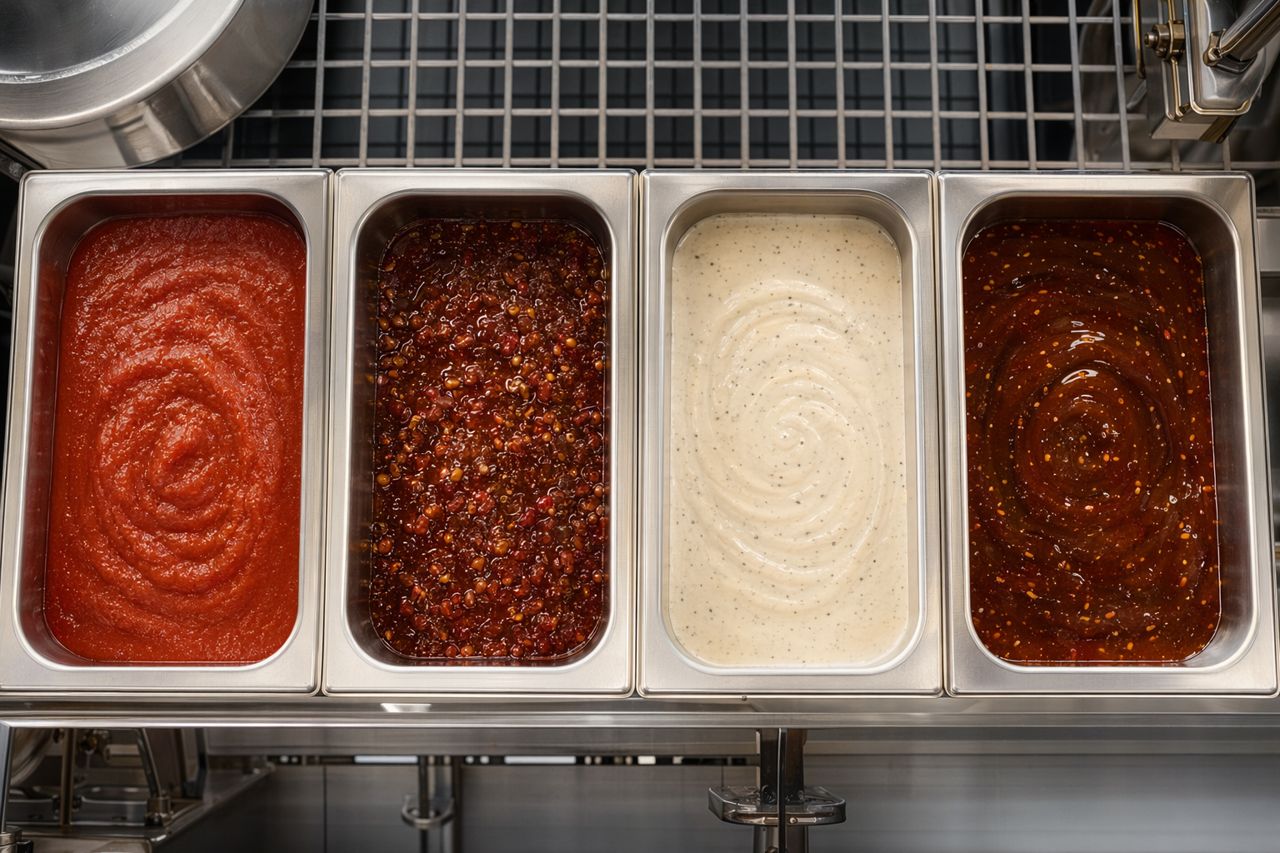
For tomato sauces, chili sauces, curry bases, and gravies, the key balance is pumpability versus plate coverage. Enzyme-supported pulp management can help teams reduce coarse fiber and improve flow while preserving a full, cooked-down mouthfeel.
Clinging sauces
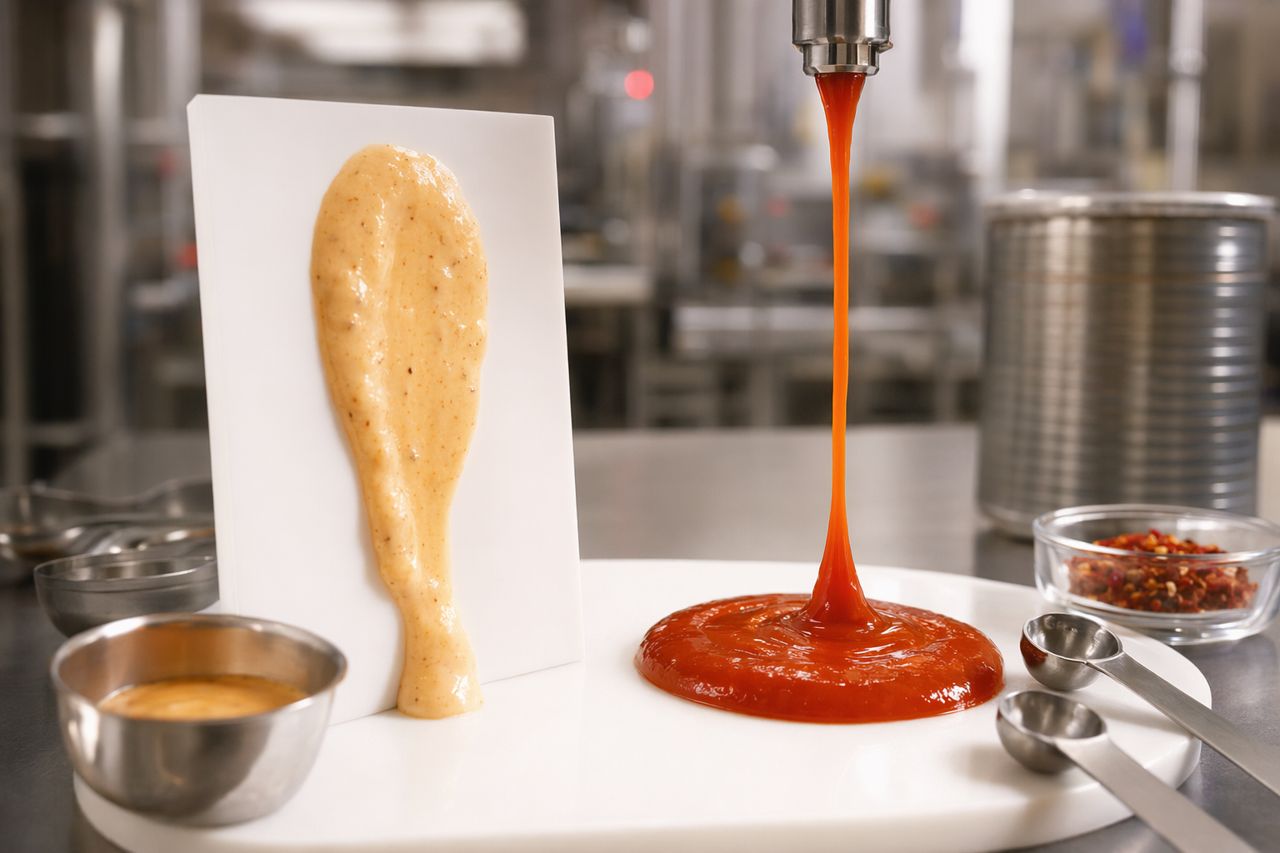
For wing glazes, burger sauces, marinades, and dipping sauces, the challenge is surface hold. The formulation needs controlled body under shear, then recovery after application. Process trials should track whether enzyme treatment improves body perception without causing watery release.
Emulsified dressings
For mayo-style, creamy, and oil-in-water dressings, texture depends on oil phase control, protein behavior, acid balance, and stabilizer design. Enzymes may support ingredient preparation or plant-based base development, but they should be integrated carefully with emulsification and heat steps.
Particulate sauces
For salsa, chutney, relish, chunky chili sauces, and inclusions, the texture system includes both the continuous phase and visible particulates. Enzyme selection must protect the intended bite while improving consistency in the surrounding sauce matrix.
Practical clean-label levers before adding complexity
Before increasing stabilizer load, many sauce teams can improve texture repeatability by reviewing five practical levers.
1. Raw material standardization
Seasonal solids, fiber, and natural pectin variation can move viscosity more than the final thickener adjustment. Pilot trials should compare supplier lots, pre-processing conditions, and storage age before locking a formulation.
2. Process sequencing
When ingredients are added matters. Acid, salt, heat, oil, and shear can change how plant solids hydrate or break down. Enzymes require especially clear sequencing because the process must allow useful action and then stop it reliably.
3. Thermal control
Heat treatment does more than make the product safe. It sets starch behavior, protein structure, pectin response, and final sauce recovery. Clean-label systems often need tighter thermal discipline because they have less formulation redundancy.
4. Shear mapping
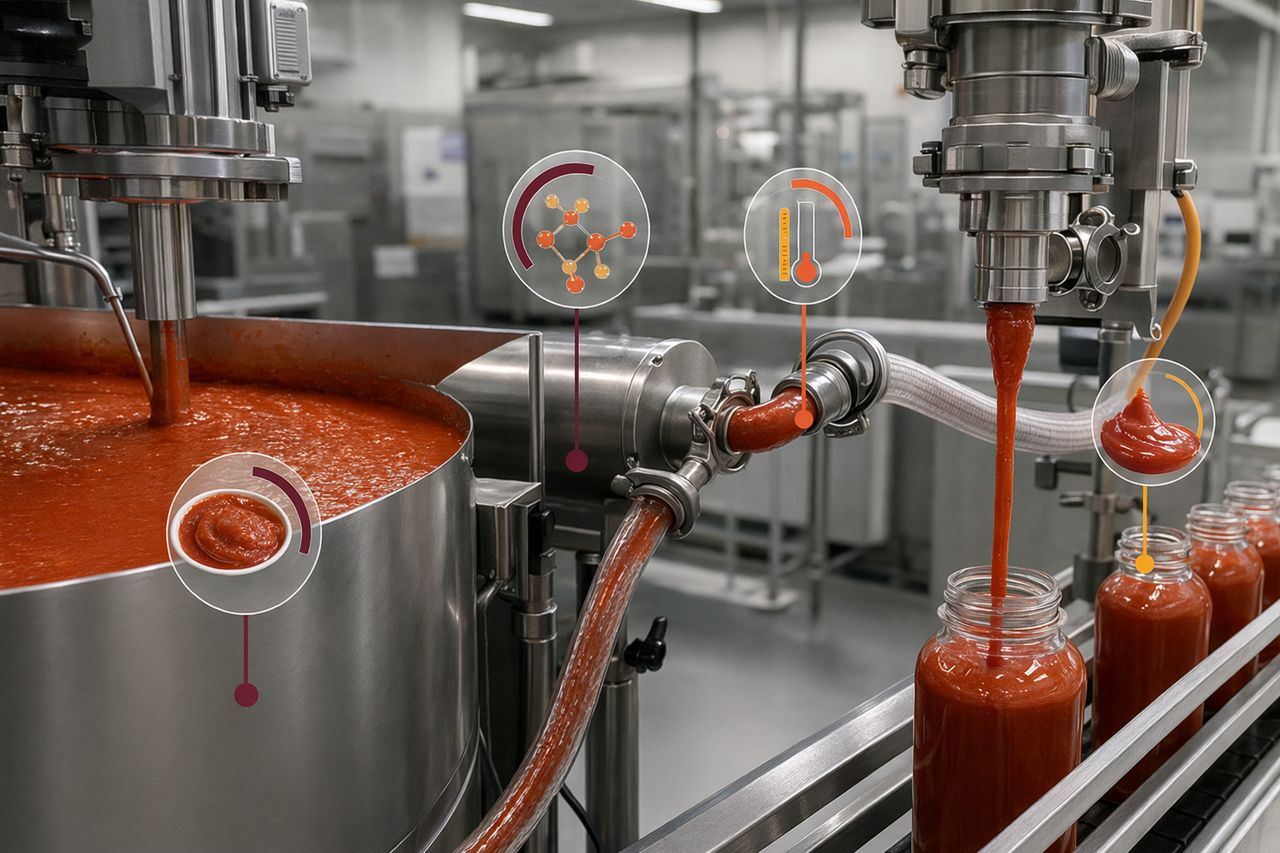
A lab blender, pilot kettle, transfer pump, and production filler do not apply the same mechanical history. A sauce that looks correct in a beaker may lose body after the real line. Shear mapping helps R&D avoid surprises during scale-up.
5. Stability checkpoints
Clean-label texture should be checked after production, cooling, storage, distribution simulation, reheating, and final use. A single viscosity reading immediately after cooking is rarely enough to predict commercial performance.
What to test in a pilot trial
Enzymecloud recommends a structured pilot matrix rather than one-off bench adjustments. The goal is to connect ingredient behavior to factory decisions.
A useful trial plan may compare:
- Untreated control versus enzyme-supported pre-treatment
- Different raw material lots or puree sources
- Ingredient addition sequence
- Hold time before heat stop
- Shear exposure before and after cooking
- Final pH and salt range within the approved formulation
- Hot-fill, chilled-fill, or frozen-thaw handling conditions
- Texture recovery after pumping, shaking, or reheating
The strongest pilot data links sensory language to measurable production outcomes: pour speed, cling, yield, separation resistance, line pressure, fill accuracy, and batch repeatability.
Clean-label does not mean low-control
A premium clean-label sauce still needs industrial discipline. It must meet food safety requirements, deliver consistent eating quality, and behave on the line.
Enzymes are most valuable when they are treated as process tools with defined boundaries. That includes:
- Clear raw material specification
- Defined addition point
- Controlled contact window
- Validated heat step or stopping condition
- Sensory and stability review
- Scale-up confirmation on production-relevant equipment
This is where a practical supplier relationship matters. Enzymecloud supports formulation teams with application logic, pilot guidance, and commercial process thinking for sauce systems that must perform repeatedly.
Choosing the right enzyme-supported strategy
The right solution depends on the sauce base and the commercial target.
For vegetable-rich sauces, the focus may be smoother pulp, improved solids release, and more controlled fiber structure. For starch-influenced sauces, the priority may be preventing excessive thickness or reducing pasty mouthfeel. For plant-based creamy sauces, the challenge may be balancing smoothness, protein behavior, and emulsion stability. For spicy glazes, the target may be cling, shine, and stable suspension.
Enzymecloud helps buyers evaluate where enzyme use makes economic and sensory sense, and where a different process or formulation change is the better decision.
Buyer value for high-throughput sauce operations
For cloud kitchen sauce factories, the commercial case is straightforward. Better texture control can reduce rework, improve fill consistency, protect yield, and make menu launches more repeatable.
Potential operational benefits include:
- More consistent viscosity across seasonal raw material variation
- Improved mouthfeel without overbuilding stabilizer systems
- Better pumpability and reduced line friction in selected sauce bases
- Higher usable yield from vegetable, fruit, or spice-rich inputs
- Reduced separation risk during storage and delivery
- Faster R&D screening for new sauces and limited-time menu items
- Cleaner scale-up from bench to pilot to production
Work with Enzymecloud
If your team is developing clean-label sauces, dressings, glazes, or bases, Enzymecloud can help define an enzyme-supported trial plan around your ingredients, process, and target texture.
Share the product or application, the quantity, the destination country, your sauce type, current texture challenge, process outline and desired mouthfeel. We will help you identify the most practical route for pilot validation and quote trial and production quantities; pack sizes are quoted per order.
Request a quote through the on-site contact form to start a formulation review with Enzymecloud.