Sauce texture you can scale with confidence
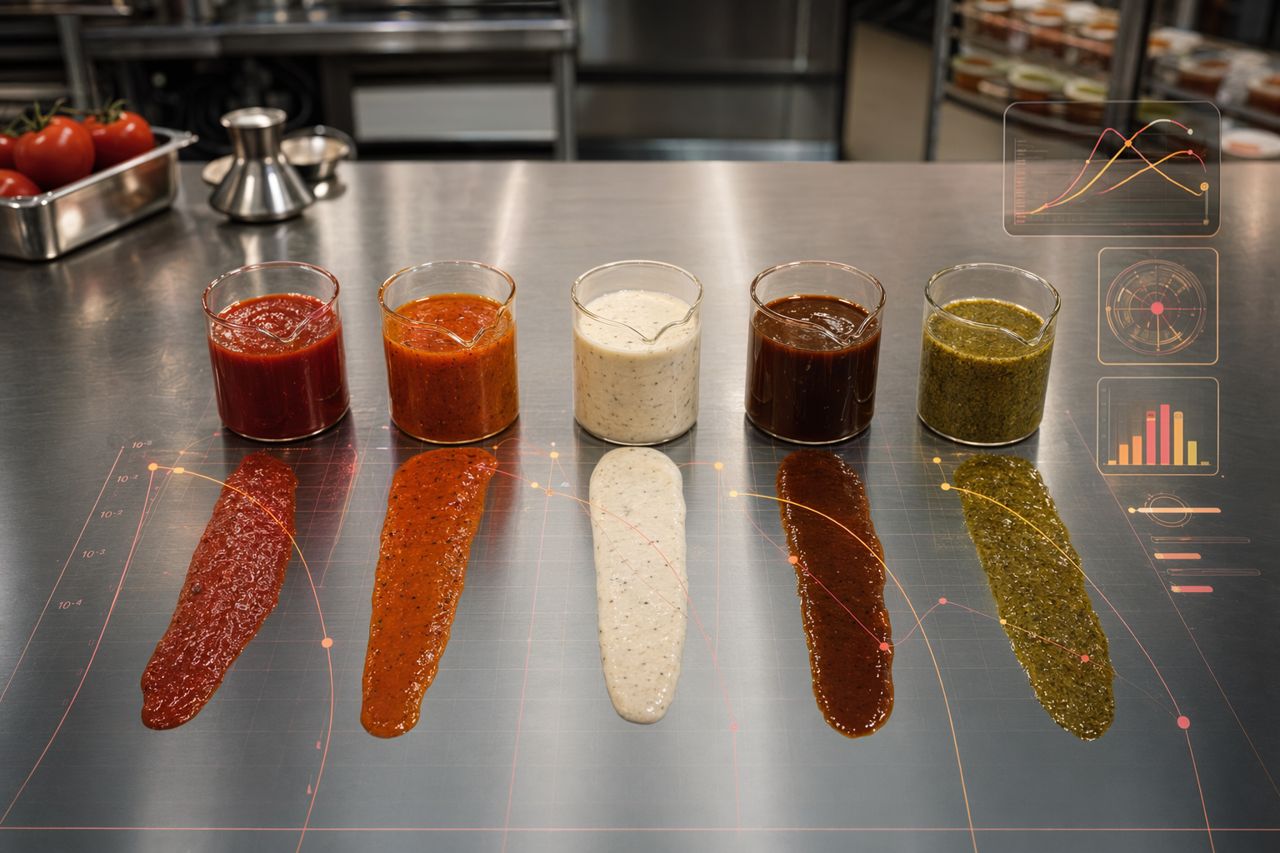
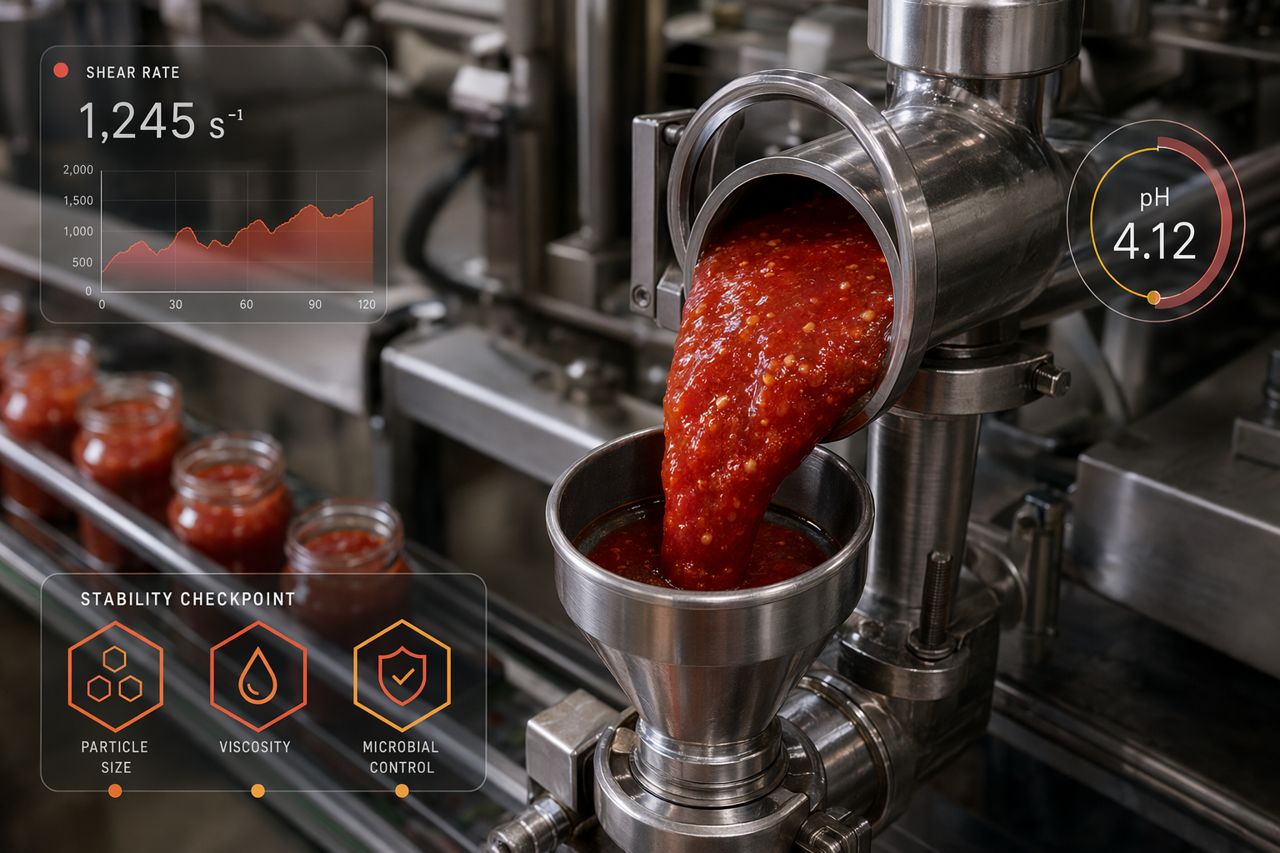
Cloud kitchen sauce production moves fast: tomato bases, chili pastes, mayo-style emulsions, glazes, marinades, dressings, gravies, and savory concentrates all need to hit the same texture target after mixing, heating, holding, pumping, filling, chilling, and dispatch.
Enzymecloud supports sauce manufacturers with practical enzyme options for starch, protein, and fat systems—built around pilot trials, viscosity targets, mouthfeel, yield, and batch repeatability.
As a food enzyme supplier for sauce manufacturing, we supply sauce and dressing manufacturers, co-packers, central kitchens and ingredient distributors that buy for production, not for home use. Pack sizes, quantities and delivery are quoted per order.
For manufacturers, co-packers and resellers. To get a quote, send the product or application, the quantity you need and the destination country. Request a quote
Who we supply
- Sauce, dressing, condiment and marinade manufacturers
- Co-packers and private-label sauce producers working for restaurant and delivery brands
- Central kitchens and cloud kitchen groups that make sauces at production scale
- Food ingredient distributors and resellers who supply sauce plants
We work with business buyers only. Every inquiry is answered with a quote for the product, quantity and destination you name.
Built for the realities of cloud kitchen sauce factories
Your sauces are not judged in a lab alone. They are judged after scale-up, thermal stress, shear, holding time, cold storage, hot filling, delivery reheating, and menu service.
Enzymecloud focuses on factory-relevant outcomes:
- More consistent viscosity from batch to batch
- Cleaner pumpability without thinning the finished eating texture
- Improved yield from starch-rich or protein-rich raw materials
- Better savory release and rounded flavor perception
- Controlled breakdown of gums, starches, fibers, proteins, or fats where appropriate
- Reduced rework caused by over-thickening, splitting, graininess, or weak cling
- Repeatable pilot-to-production handoff for multi-site sauce programs
We do not start with a catalog. We start with your sauce behavior, then quote the enzyme supply that fits it.
Enzyme options aligned to your formulation challenge
Starch and vegetable-base sauces
Tomato, onion, chili, garlic, lentil, pulse, and grain-based sauces can shift quickly in viscosity depending on raw material seasonality, cooking profile, solids loading, and shear history.
Enzymecloud helps you evaluate enzyme routes that can:
- Fine-tune thickness without excessive dilution
- Improve solids utilization and extractable yield
- Reduce pasty or gluey texture in starch-heavy bases
- Support smoother flow through kettles, transfer lines, and fillers
- Improve repeatability across incoming crop variation
Protein-rich sauces, gravies, and savory concentrates
Protein systems can create haze, sediment, bitterness, graininess, or inconsistent body if breakdown is not managed carefully.
We help teams screen controlled protein modification approaches for:
- Fuller savory impact
- Improved mouth-coating without heaviness
- Better integration of meat, dairy, plant protein, yeast, or pulse components
- Reduced gritty perception in concentrated bases
- More predictable texture after heat and hold cycles
Fat systems, emulsions, mayo-style sauces, and dressings
Fat-containing sauces need controlled richness, stable body, and clean flavor release. Enzyme selection must be aligned with emulsifier strategy, acid profile, process temperature, and shelf-life goals.
Enzymecloud supports development work for:
- Better mouthfeel and flavor lift
- Cleaner fat-phase integration
- Reduced risk of oily separation
- Support for premium texture in lower-fat or reformulated sauces
- Consistent sensory performance after pumping and filling
From bench trial to batch repeatability
We work with cloud kitchen sauce factories through a practical development path:
-
Define the target
Viscosity window, cling, pour, pumpability, mouthfeel, flavor profile, hold time, fill behavior, and shelf-life expectations. -
Map the formulation system
Starches, proteins, fibers, fats, acids, salts, gums, preservatives, thermal steps, shear points, and packaging format. -
Select enzyme candidates
Options are chosen for the material system and intended process window—not for generic label fit alone. -
Run pilot trials
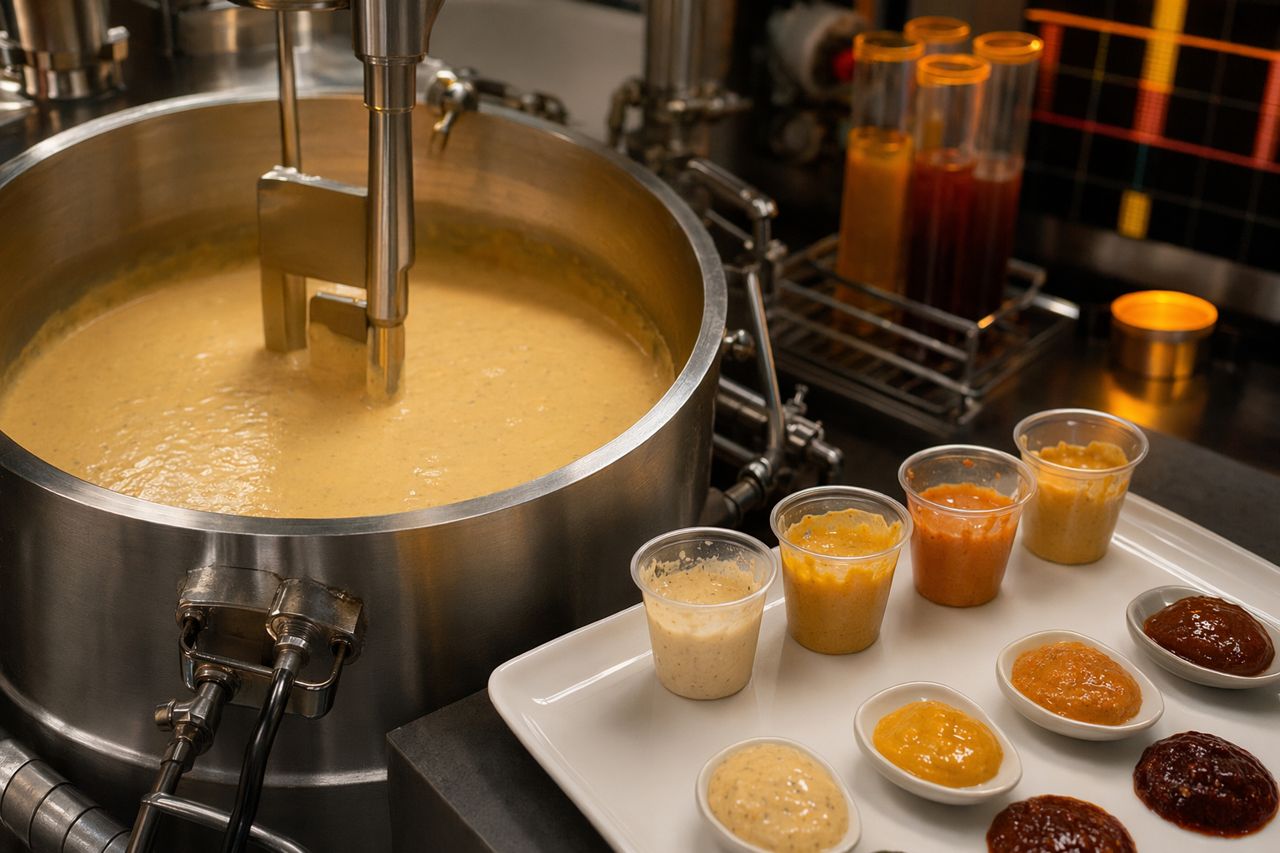
Compare control and treated batches under realistic mixing, cooking, holding, and filling conditions. -
Lock the operating approach
Define handling sequence, addition point, processing guardrails, and evaluation checkpoints for production handoff. -
Support scale-up
Review batch records, sensory observations, viscosity trends, and stability checkpoints to improve repeatability.
Common sauce manufacturing problems we help troubleshoot
“The same recipe gives a different thickness every week.”
Raw material variability, starch behavior, solids distribution, heat load, and shear exposure can all affect final viscosity. Enzyme-led adjustment can help create a more controllable process window.
“The sauce pumps well when hot but sets too firm after chilling.”
We help identify whether starch, fiber, protein, or fat behavior is driving the change, then evaluate targeted modification strategies without compromising eating texture.
“Our savory sauce tastes flat after scale-up.”
Processing, dilution, fat distribution, and protein breakdown can affect flavor release. Enzyme trials may improve depth, roundness, and lingering savory character.
“We need better yield without making the sauce watery.”
Enzymecloud supports enzyme screening for improved solids utilization and extraction while protecting viscosity, cling, and mouthfeel.
“The sauce separates after hold or transport.”
We evaluate the full system: emulsification, particle size, gums, salts, acidity, fat phase, thermal profile, and enzyme compatibility.
Why sauce factories choose Enzymecloud
- R&D-led guidance: We translate enzyme selection into formulation decisions, not vague ingredient claims.
- Factory-first thinking: We account for kettles, tanks, pumps, fillers, hold time, chill cycles, and dispatch requirements.
- Texture intelligence: We focus on the sauce behavior your operators and customers actually see.
- Pilot discipline: Trials are structured to reveal process fit, not just bench-top promise.
- Premium consultative support: We help your team compare options, document learnings, and move toward a repeatable production approach.
Designed for high-throughput sauce portfolios
Enzymecloud can support enzyme evaluation for:
- Tomato sauces and pizza sauces
- Chili sauces, hot sauces, and pepper pastes
- BBQ sauces, glazes, and marinades
- Mayo-style sauces and creamy dressings
- Gravies, curry bases, and demi-style sauces
- Vegan and plant-based savory sauces
- Dips, spreads, relishes, and condiment bases
- Cloud kitchen central-prep sauce systems
Whether you are improving one flagship sauce or standardizing a multi-menu portfolio, our goal is the same: controlled texture, reliable sensory quality, and fewer surprises at scale.
Request a quote for wholesale and bulk supply
Tell us what you are making, what is changing in the batch, and what target you need to hit. Enzymecloud will respond with a practical route for enzyme selection, pilot trial planning, and a quotation for trial and production quantities.
Use the on-site request form below and include:
- Product or application you need an enzyme for
- Quantity (trial and expected regular volume)
- Destination country for delivery
- Sauce type and base ingredients
- Current process flow
- Target viscosity or texture description
- Key issue: thinning, thickening, separation, yield, flavor, or stability
- Batch size range and production frequency
- Desired timeline for pilot evaluation