Cloud Kitchen Sauce Process Troubleshooting
When one sauce platform feeds multiple cloud kitchen brands, small process shifts become visible fast: a chili glaze thins during holding, a tomato base weeps after chilling, a creamy dressing loses body after pumping, or a marinade tastes different from batch to batch.
Enzymecloud helps sauce manufacturers troubleshoot these issues with practical enzyme-led formulation support, pilot trial guidance, and production-ready recommendations. If you need a food enzyme supplier for sauce manufacturing that can speak in viscosity targets, yield protection, mouthfeel, stability, and repeatability, we are built for that conversation.
Troubleshooting for high-throughput sauce lines
Cloud kitchen sauce factories operate differently from traditional single-brand kitchens. You may be producing tomato bases, chili sauces, gravies, mayonnaise-style dressings, marinades, dipping sauces, glazes, and heat-and-hold components on shared equipment with fast changeovers.
That creates recurring technical pressure:
- Texture must stay consistent across hot-fill, chilled, frozen, or ambient workflows
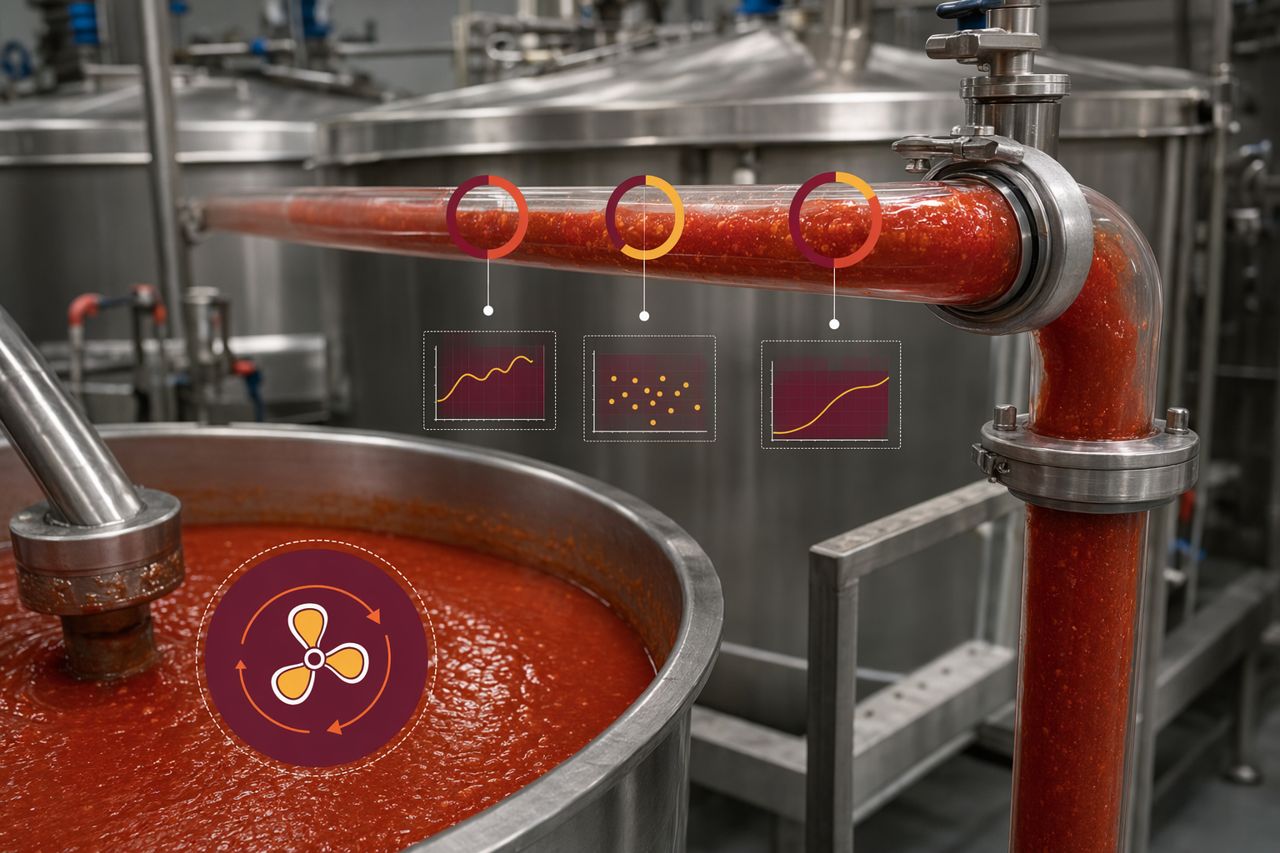
- Viscosity must survive pumping, mixing, holding, dosing, and reheating
- Flavor release must be reliable across multiple menu applications
- Raw material variation must not disrupt production planning
- Sauces must behave the same at pilot, first scale-up, and full production
Enzymecloud supports process teams that need controlled sauce behavior, not guesswork.
Common sauce factory problems we help diagnose
1. Viscosity drift after cooking, cooling, or holding
A sauce may look correct at discharge but become too thin, too thick, stringy, or gelled after storage. This can be caused by starch behavior, pectin structure, protein interaction, fruit or vegetable solids, shear history, pH, salt, sugar, emulsifier balance, or thermal exposure.
We help identify where enzyme selection and process timing can support a more predictable viscosity curve.
2. Water separation, oiling-off, or unstable suspension
Phase separation creates waste, rework, consumer complaints, and dosing problems. In cloud kitchen production, instability can be amplified when sauces are held in bulk, chilled, portioned, or reheated.
Our approach considers the full matrix: solids, fiber, oil, protein, starch, gums, acidity, process temperature, and packaging conditions.
3. Poor yield from vegetable, fruit, chili, or spice solids
Tomato, pepper, onion, garlic, fruit, herb, and spice systems often trap usable mass in pulp, skins, cell wall material, or fibrous sediment. Enzyme-supported processing may improve extractability, flow, filtration behavior, and usable sauce recovery while protecting the desired texture.
4. Mouthfeel inconsistency across batches
A sauce can meet basic specifications but still feel wrong: too pasty, watery, gritty, sticky, heavy, or flat. We help tune enzyme strategy around the sensory target, so mouthfeel remains aligned with the brand standard.
5. Flavor release that changes after storage
Sauce flavor is not only a recipe issue. Viscosity, emulsion structure, soluble solids, acidity, and particle size all affect perceived heat, sweetness, acidity, savory depth, and aroma release. Enzyme selection can influence how the sauce carries flavor through production and service.
Enzyme solution areas for sauce manufacturing
Enzymecloud supports diagnostic work across several sauce-relevant enzyme categories, selected according to the raw material, process, and target outcome.
Pectin-focused solutions
For fruit, tomato, chili, and vegetable-based sauces where pectin structure affects flow, separation, yield, and texture. Useful when teams need controlled breakdown rather than uncontrolled thinning.
Cell wall and fiber modification support
For sauces containing vegetable pulp, chili solids, onion, garlic, herbs, spices, or fruit fibers. The goal is often better extraction, smoother flow, improved suspension, or reduced coarse sediment without losing recognizable body.
Starch and carbohydrate texture management
For gravies, glazes, sweet sauces, savory bases, and starch-supported systems where heat, shear, and holding conditions influence viscosity. We help evaluate how enzyme use interacts with starch selection and process sequence.
Protein and emulsion-adjacent applications
For creamy sauces, dressings, marinades, dairy-style bases, and protein-containing systems where mouthfeel, stability, and flavor release depend on the full formulation architecture.
Flavor development and process efficiency support
For factories seeking more consistent savory impact, better raw material utilization, or more repeatable process behavior without constantly reformulating around every ingredient variation.
How Enzymecloud troubleshoots your sauce process
Step 1: Define the failure mode
We start by mapping the exact issue: thinning, thickening, separation, sediment, poor yield, flavor inconsistency, pumping difficulty, filling variation, or instability after storage.
Step 2: Review the production pathway
We look at raw materials, hydration, order of addition, mixing, cook profile, pH adjustment, hold time, cooling, shear exposure, packaging, and service conditions.
Step 3: Set practical performance targets
Instead of vague texture language, we align on measurable production goals such as target viscosity range, flow behavior, phase stability, pumpability, yield improvement, sensory profile, and shelf-life checkpoints.
Step 4: Design a focused pilot trial
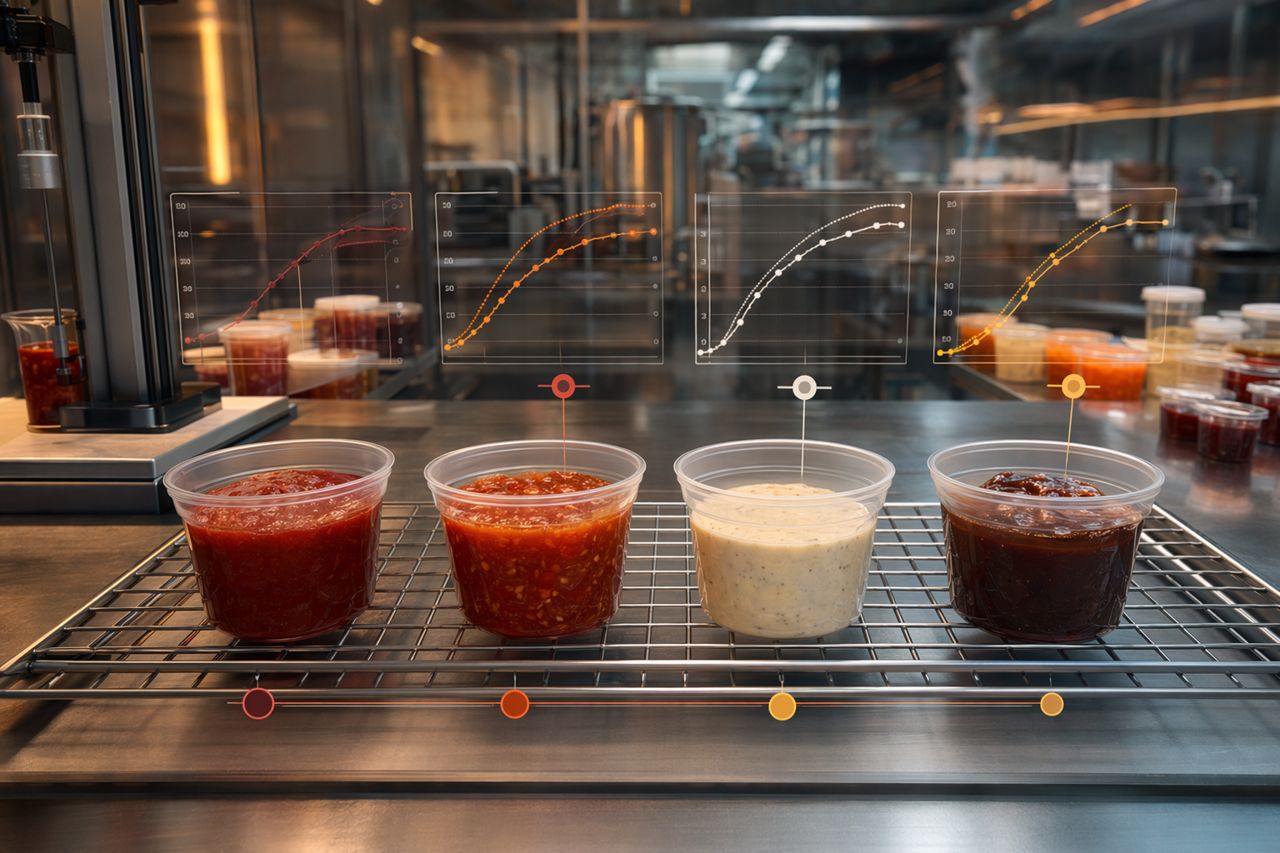
We recommend a short, controlled pilot structure with comparison batches, clear evaluation points, and process conditions that reflect real production. The objective is to reduce uncertainty before scale-up.
Step 5: Translate results into production guidance
Once pilot behavior is validated, we help your team convert findings into a repeatable plant process: dosing point, contact window, temperature fit, pH fit, mixing approach, inactivation or downstream control, and quality checkpoints.
Built for cloud kitchen sauce portfolios
Multi-brand sauce production needs flexibility. One factory may run spicy dips in the morning, tomato bases at midday, creamy dressings in the afternoon, and glaze systems before dispatch. Enzymecloud supports portfolio-level troubleshooting, so your enzyme strategy can be rationalized across sauce families instead of handled as isolated emergencies.
We help teams evaluate:
- Which sauces can share a process logic
- Which formulas require different enzyme pathways
- Where enzyme use can reduce rework or batch rejection
- How to maintain brand-specific mouthfeel across common equipment
- How to protect stability during storage, transport, and final kitchen use
When to contact Enzymecloud
Reach out when your team is seeing any of the following:
- Sauce viscosity changes after cooling or overnight storage
- Separation in bottles, pouches, tubs, or holding tanks
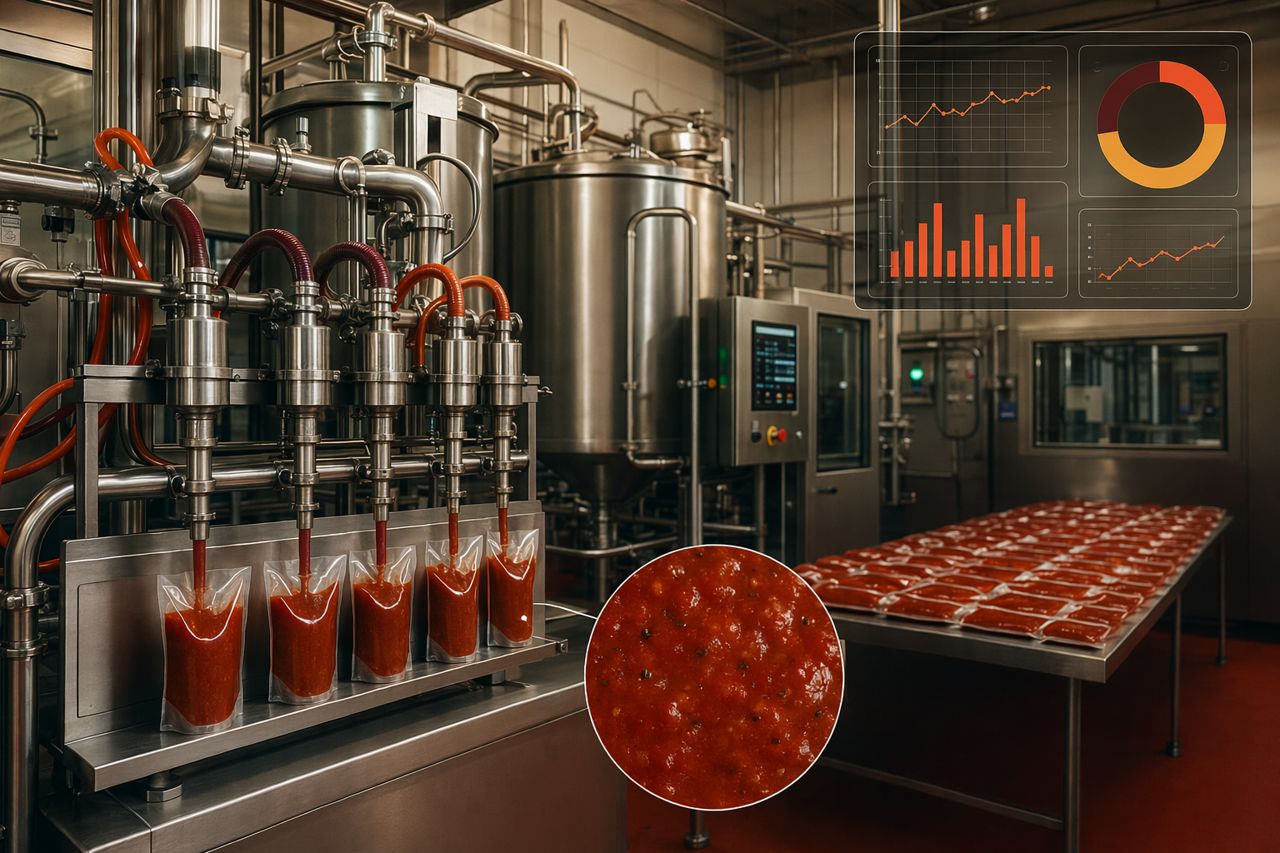
- Poor flow through pumps, fillers, or dosing equipment
- Gritty, pulpy, pasty, watery, or unstable mouthfeel
- Low recovery from tomato, chili, fruit, vegetable, herb, or spice solids
- Inconsistent flavor release between batches
- Scale-up results that do not match pilot trials
- Too much rework caused by texture or stability failures
What we need for a useful quote
To recommend the right enzyme solution, we typically ask for:
- Sauce type and target application
- Key raw materials and solids profile
- Current process flow and temperature range
- pH range and major formulation constraints
- Current texture, stability, or yield issue
- Desired viscosity, mouthfeel, and shelf-life behavior
- Batch size, production frequency, and scale-up timeline
Request a quote
If your sauce line is fighting viscosity drift, separation, yield loss, or inconsistent mouthfeel, Enzymecloud can help structure the next trial.
Use the on-site request a quote form and share your sauce type, process challenge, and target outcome. Our team will review the application and respond with a practical enzyme recommendation pathway for your factory.