Allergen and Protein Ingredient Decisions in Savory Sauce Development
Protein ingredients can make a savory sauce feel richer, cling better, emulsify faster, or finish cleaner on the palate. They can also complicate allergen control, viscosity repeatability, heat stability, and line changeovers.
For cloud kitchen sauce factories, the decision is rarely just “which protein tastes best?” It is a manufacturing decision: how the ingredient behaves under shear, acid, heat, salt, oil load, holding time, and dispatch conditions.
Enzymecloud supports sauce teams that need practical formulation guidance, pilot-ready enzyme options, and repeatable texture outcomes. As a food enzyme supplier for sauce manufacturing, we help R&D and production teams evaluate protein functionality without losing sight of allergen risk, process fit, and commercial scale-up.
Why protein choices matter in savory sauces
Protein ingredients are commonly used in sauces, dressings, dips, marinades, glazes, spreads, and finishing bases to influence:
- Mouthfeel: creaminess, body, coating, and perceived richness
- Emulsion behavior: oil dispersion, stability, and separation resistance
- Viscosity profile: spoonability, pourability, pumpability, and cling
- Heat tolerance: resistance to graininess, curdling, or protein tightening
- Flavor delivery: savory depth, dairy notes, roasted character, or umami lift
- Yield and solids management: improved use of protein-rich inputs or byproducts
- Batch repeatability: tighter control across kitchens, shifts, and suppliers
The challenge is that many protein systems carry allergen considerations or process sensitivities. A high-performing ingredient in bench trials may become difficult at high throughput if it increases cleaning burden, destabilizes under acid, or creates inconsistent viscosity after hot fill or chilled storage.
Common protein and allergen decision points
Dairy proteins
Dairy proteins can bring creaminess, opacity, and rounded flavor to cheese sauces, white sauces, ranch-style dressings, creamy dips, and premium marinades.
Key formulation questions:
- Will the sauce experience low pH, high salt, or thermal stress?
- Is the target texture glossy and pourable, or thick and spoonable?
- Will the product be reheated, held hot, chilled, or frozen?
- Does the dairy note support the cuisine system, or does it mask spices and aromatics?
Dairy systems may require careful control to avoid graininess, viscosity drift, or separation during storage.
Egg-derived ingredients
Egg ingredients are valued in mayonnaise-style sauces, aioli, dressings, and emulsified dips for body, gloss, and emulsion support.
Key formulation questions:
- Is egg essential to the eating experience, or can the emulsion be supported another way?
- What is the required oil load and shear profile?
- How sensitive is the product to storage temperature changes?
- Does the site have robust egg allergen segregation and validation?
For cloud kitchen operations with frequent SKU changes, egg can increase operational complexity even when it performs well technically.
Soy and legume proteins
Soy and other legume proteins can support plant-forward sauces, umami bases, protein-enriched dressings, and cost-managed creamy systems.
Key formulation questions:
- Does the ingredient introduce beany, bitter, or chalky notes?
- How does it behave under acid and salt?
- Will it hydrate consistently at production speed?
- Does the target market accept the allergen or labeling profile?
Controlled enzymatic modification may help adjust solubility, mouthfeel, or flavor release, but it must be validated against the final allergen and label strategy.
Wheat, gluten, and cereal-derived inputs
Cereal-derived ingredients may contribute body, binding, or cooked notes in gravies, glaze bases, and savory concentrates.
Key formulation questions:
- Is gluten-free positioning required?
- Does starch or protein contribute more to the desired texture?
- Will the sauce be frozen, thawed, reheated, or held under service conditions?
- Does the ingredient create haze, dullness, or pasty mouthfeel?
For factories serving multiple cloud kitchen brands, gluten status often becomes a portfolio-level decision rather than a single-SKU choice.
Fish, shellfish, sesame, mustard, and region-specific allergens
Savory sauce factories often work with anchovy pastes, fish sauce, shrimp concentrates, sesame pastes, mustard systems, and spice blends that may carry allergen relevance depending on market.
Key formulation questions:
- Is the ingredient central to authenticity or replaceable with a flavor system?
- Does the line handle multiple allergen classes in one shift?
- Is the risk driven by formulation, cross-contact, or supplier variability?
- Are regional labeling rules aligned with export markets?
These ingredients can deliver exceptional flavor, but they require precise supplier documentation and disciplined production planning.
Where enzymes fit into protein decisions
Enzymes are not a shortcut for allergen removal. Allergen status must be determined through ingredient identity, regulatory requirements, validated controls, and finished product documentation.
Where enzymes can add value is in managing protein functionality.
In sauce manufacturing, enzyme-supported development may help teams explore:
- Protein solubility in acidic or salty systems
- Reduced grittiness or improved smoothness
- More consistent viscosity after hydration and holding
- Better flavor release from protein-rich ingredients
- Improved pumpability without thinning the eating texture too far
- Reduced batch-to-batch variation from natural raw materials
- Use of alternative protein sources with improved sensory balance
The commercial objective is not to make the formula more complicated. It is to make the chosen protein system more predictable.
A practical decision framework for sauce R&D
1. Define the eating texture first
Before selecting the protein source, define the sauce behavior:
- Ribboning or dipping?
- Glossy or matte?
- Clean break or long cling?
- Creamy, pulpy, gelled, or pourable?
- Stable hot, chilled, ambient, or through reheating?
Protein selection should follow the desired texture, not the other way around.
2. Map allergen exposure at portfolio level
A single sauce may look manageable, but the risk changes across a cloud kitchen sauce factory producing many SKUs.
Evaluate:
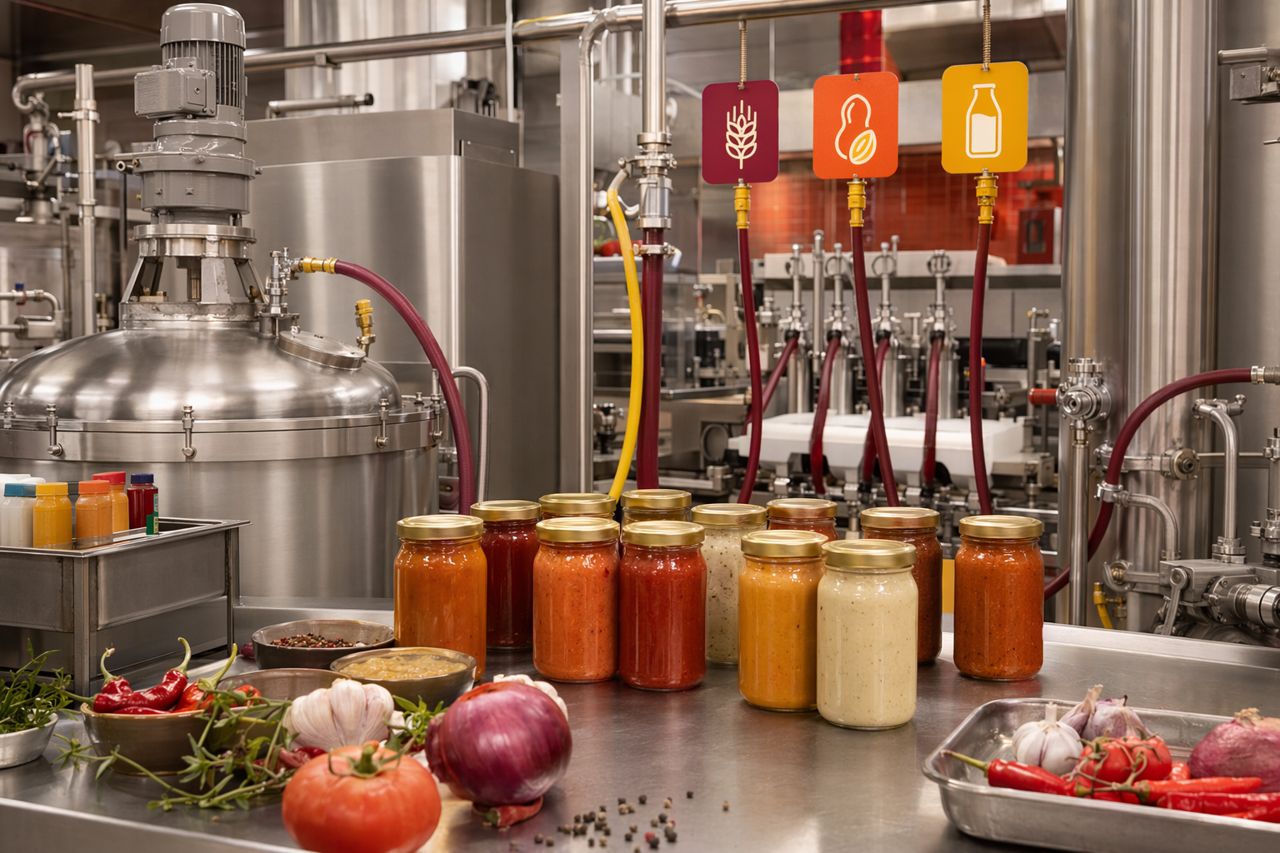
- Shared kettles, mixers, holding tanks, fillers, and hoses
- Production sequencing between allergen and non-allergen SKUs
- Cleaning validation burden
- Supplier documentation and change notification practices
- Regional allergen labeling obligations
- Customer-specific restrictions
The lowest-cost ingredient may not be the lowest-cost production decision.
3. Test under real process conditions
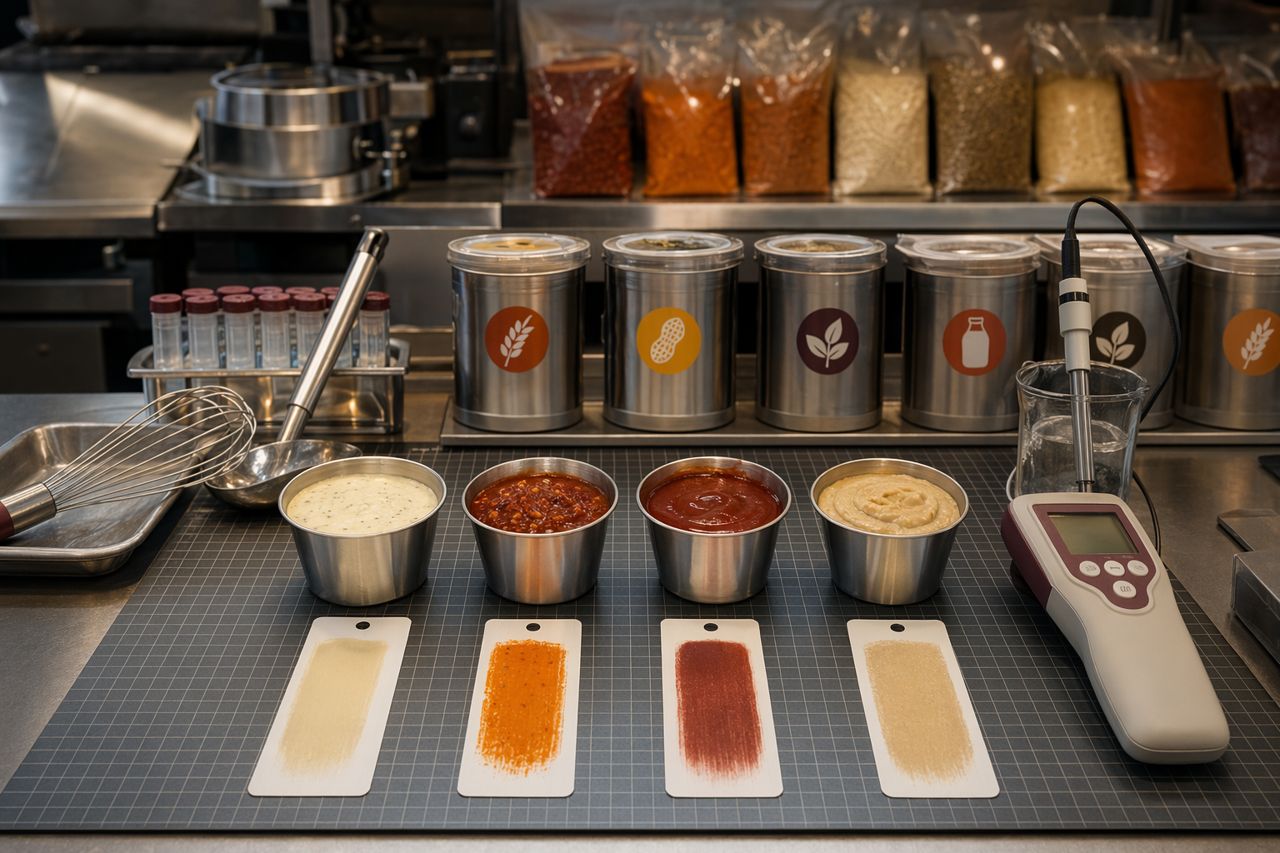
Bench performance can be misleading. Protein systems should be tested against actual manufacturing stress:
- Hydration order
- Shear intensity
- Heat ramp and hold
- pH adjustment timing
- Salt and acid addition
- Oil phase loading
- Cooling profile
- Filling temperature
- Storage and dispatch conditions
For high-throughput sauce production, the key question is whether the formulation behaves the same way on Tuesday afternoon as it did in the R&D cup.
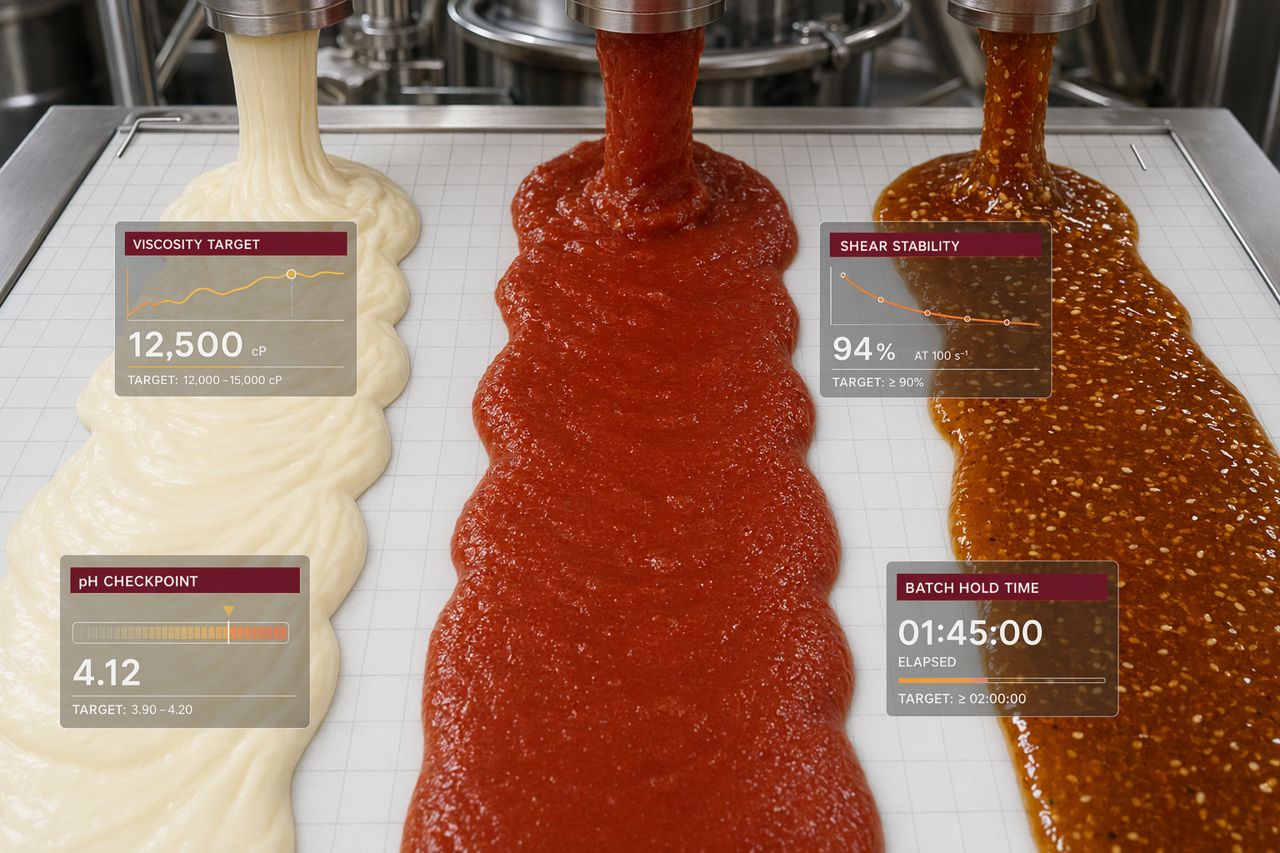
4. Protect viscosity targets
Protein choices can shift viscosity in several ways. Some build structure slowly after hydration. Some thin under shear. Some tighten during heat. Some drift during chilled storage.
A reliable development plan should define:
- Target viscosity window for production and eating
- Acceptable change after holding
- Pump and filler behavior
- Visual cling on the finished dish
- Sensory perception after reheating or delivery
Enzymecloud focuses on this practical bridge between formulation intent and factory repeatability.
5. Validate flavor impact early
Protein ingredients can add savory depth, but they can also introduce bitterness, cooked notes, chalkiness, sulfur tones, or flavor masking.
This matters especially in sauces with:
- Chili and fermented notes
- Tomato and vinegar acidity
- Roasted alliums
- Dairy or cheese bases
- Soy, miso, fish, or yeast-derived umami
- High spice load
If enzyme processing is considered, flavor release and aftertaste should be evaluated alongside texture, not as a late-stage correction.
Questions to ask before approving a protein system
Use these questions before moving from bench to pilot:
- What allergen declaration does this ingredient create in each sales market?
- Does the factory already handle this allergen, or does it introduce a new control class?
- Is the ingredient essential for sensory performance?
- Can the same texture be achieved with lower operational complexity?
- Does the protein remain stable under the target pH, salt, heat, and shear?
- Will viscosity remain inside the production window after holding and filling?
- Does the ingredient affect cleaning time or production sequencing?
- Are supplier specifications tight enough for repeatable sauce behavior?
- Does the ingredient create flavor drift between batches?
- Has the final system been tested under realistic dispatch and service conditions?
How Enzymecloud supports sauce factories
Enzymecloud works with sauce developers, factory teams, and procurement managers that need enzyme-led problem solving without vague promises.
We can support projects involving:
- Protein-rich savory bases
- Creamy and emulsified sauces
- Plant-forward dressings and dips
- Umami concentrates and marinades
- Heat-stable fillings and finishing sauces
- Viscosity correction and mouthfeel optimization
- Pilot trials for alternative protein systems
- Scale-up from R&D kitchen to production line
Our role is to help your team connect formulation choices to measurable production outcomes: smoother texture, controlled viscosity, stable batches, better yield, and fewer surprises during launch.
Request formulation support
If you are evaluating protein ingredients, allergen trade-offs, or enzyme-supported texture development for a savory sauce portfolio, Enzymecloud can help you define the right pilot path.
Request a quote through the on-site contact form and tell us about your sauce type, target texture, process conditions, and launch timeline. We will respond with a practical recommendation for the next development step.