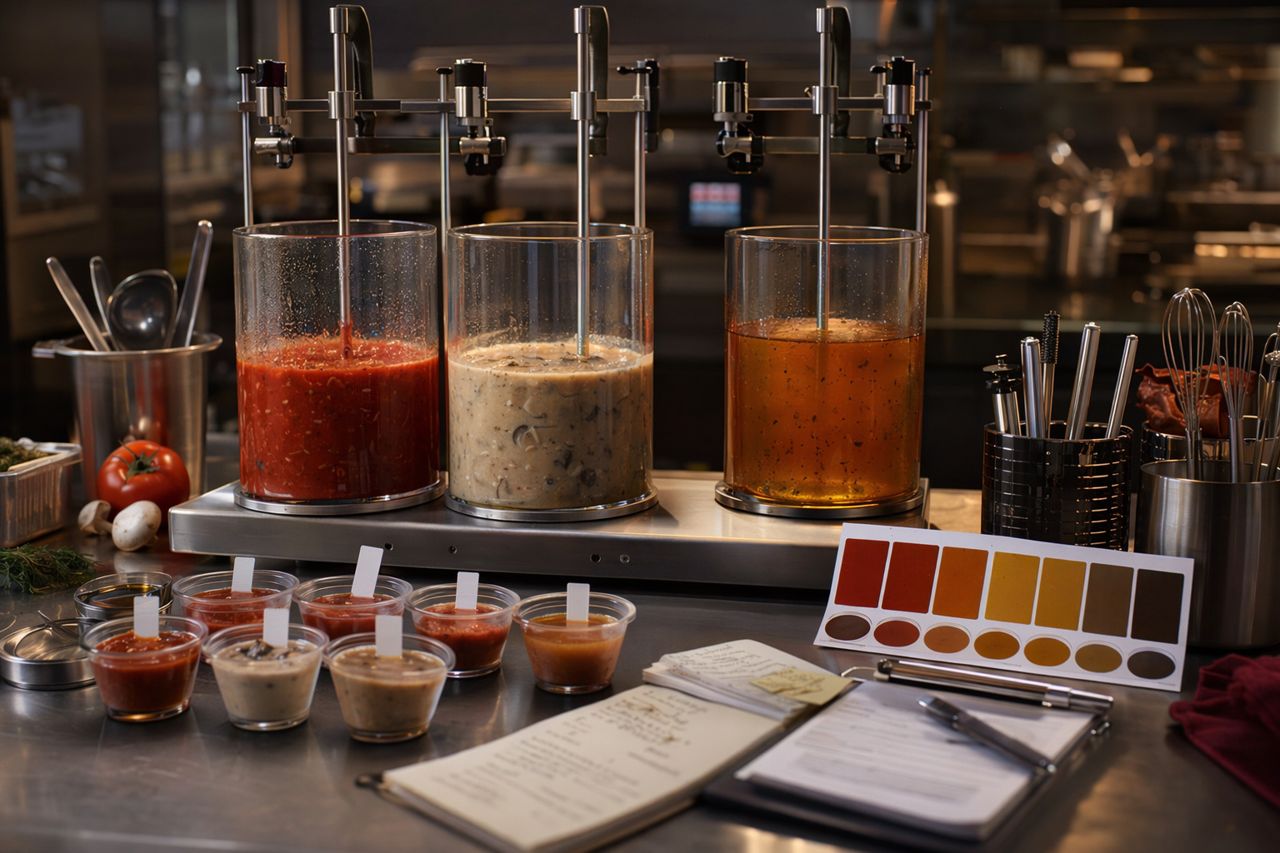
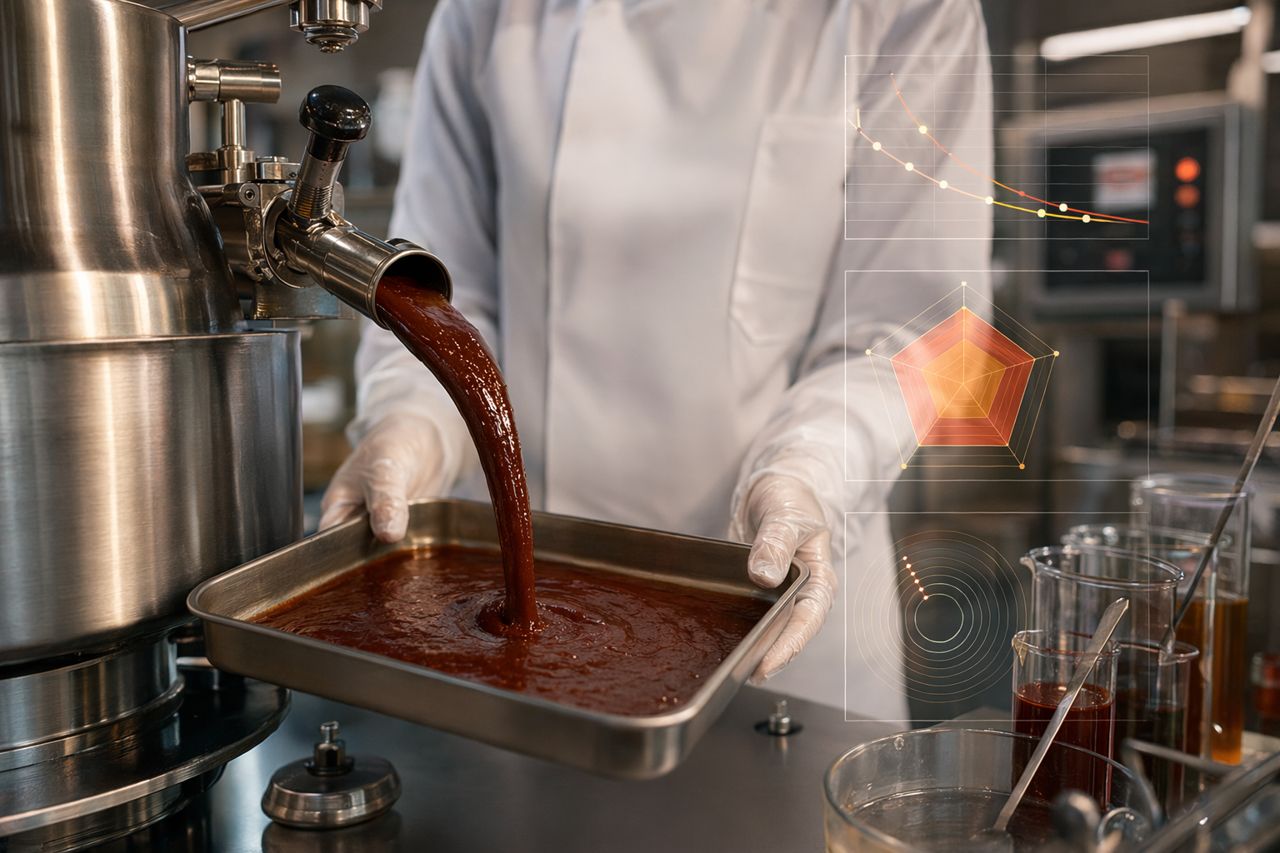
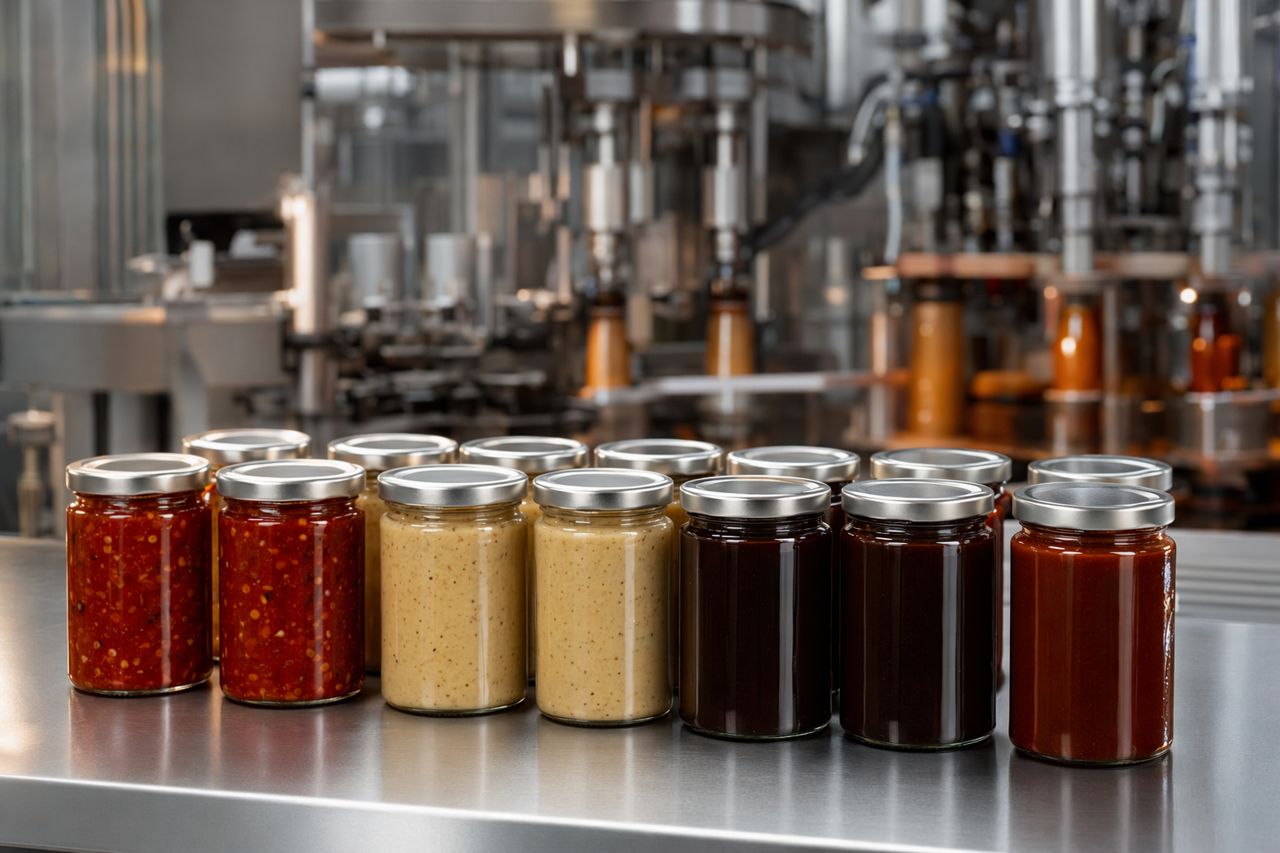
Enzyme for Savory Flavor Hydrolysis in Sauces
Savory depth is not just a flavor target. In a high-throughput cloud kitchen sauce factory, it is a repeatability challenge: richer umami without harsh bitterness, stronger broth notes without over-salting, fermented-style complexity without long dwell times, and clean mouthfeel across hot-fill, chilled, and reheated use cases.
Enzymecloud supports sauce R&D and production teams with enzyme-led savory flavor hydrolysis programs built for controlled extraction, pilot validation, and scale-ready documentation. If you are evaluating a food enzyme supplier for sauce manufacturing, we help connect enzyme selection to the commercial realities of sauce viscosity, flavor release, yield, stability, and batch-to-batch consistency.
We supply seasoning, sauce and flavor-base manufacturers and the distributors who serve them; pack sizes, quantities and delivery are quoted per order.
For manufacturers, co-packers and resellers. To get a quote, send the product or application, the quantity you need and the destination country. Request a quote
Built for sauce R&D, not generic ingredient substitution
Savory hydrolysis can unlock deeper flavor from protein-rich ingredients such as yeast, plant proteins, meat stocks, seafood bases, mushroom concentrates, legume bases, and fermented seasoning streams. But the enzyme system must be matched to the finished sauce architecture.
We help teams design around practical variables:
- Desired umami intensity and broth note profile
- Bitterness control and aftertaste management
- Salt reduction support without thinning perceived flavor
- Mouthfeel preservation in pourable, spoonable, glaze, dip, and dressing formats
- Compatibility with acid, salt, sugar, oil, starch, gums, and particulates
- Thermal process fit for cook, hold, hot-fill, chill, and reheat workflows
- Repeatable scale-up from benchtop to pilot kettle to production batch
What savory flavor hydrolysis can improve
Richer umami and broth depth
Targeted hydrolysis can increase savory perception and improve flavor release from protein-containing substrates. This is useful in tomato sauces, chili bases, ramen broths, gravy systems, curry sauces, marinades, vegan meat-style sauces, and savory dressings.
Faster development of fermented-style complexity
When long fermentation is impractical, controlled enzymatic hydrolysis can help build depth, roasted notes, stock-like roundness, and aged savory character in a shorter processing window.
Better value from existing raw materials
Sauce factories often carry high-value flavor inputs that are not fully expressed in the final matrix. Enzyme selection can improve extraction and conversion from the same base stream, supporting flavor yield and more consistent sensory performance.
More controlled salt and flavor balance
A stronger savory backbone can help reduce dependence on salt, flavor enhancers, or heavy masking systems. The goal is not just intensity; it is a balanced finish that holds up after heating, cooling, pumping, and service.
How seasoning plants build umami and kokumi by hydrolysis
The umami of a savory base has three parts: free amino acids such as glutamic acid, flavor nucleotides (IMP and GMP) that work together with them, and peptides that give kokumi, the sense of depth and a lasting savory finish.
Seasoning producers build these from poultry protein with a protease blend rather than a single enzyme: alkaline protease, neutral protease and flavor protease, run at near-neutral pH. The commercial aim is the same umami depth in every batch, across the many foods the seasoning goes into.
Plant protein follows the same route. Soybean meal is hydrolysed with a compound alkaline protease system into soy umami peptides and hydrolysed vegetable protein liquid. The blend raises protein dissolution, suppresses bitterness and concentrates the umami peptides.
What this means for a sauce buyer:
- Specify the substrate first (poultry, meat stock, soybean meal or another plant protein), because the protease blend is chosen for it.
- Agree a bitterness endpoint as well as an umami target; a stronger hydrolysis is not automatically a better-tasting one.
- Ask for the blend as a system for your substrate, not three separate enzymes to combine yourself.
- Plan the deactivation step and run a sensory check after your normal heat, hold and fill cycle.
Enzyme systems we help evaluate
Enzymecloud can support formulation trials involving enzyme classes such as protease and peptidase systems for protein hydrolysis, alongside complementary enzyme strategies when plant, yeast, or complex seasoning substrates require broader texture or extraction control.
Rather than prescribing a single off-the-shelf answer, we help define the processing window and select a practical enzyme approach based on:
- Substrate source and protein profile
- Target flavor direction: meaty, brothy, roasted, fermented, mushroom, soy-style, seafood, or plant-based savory
- Desired hydrolysis level and sensory endpoint
- Risk of bitter peptide formation
- Sauce pH, salt level, sugar level, oil phase, and stabilizer system
- Cook schedule and enzyme deactivation step
- Finished viscosity and suspension targets
Designed around viscosity, mouthfeel, and stability
In sauces, flavor hydrolysis cannot be separated from texture. A process that delivers more umami but breaks body, causes thinning, creates sediment, or changes cling is not production-ready.
Our application work focuses on the full sauce system:
Viscosity targets
We consider how enzyme treatment interacts with starches, gums, proteins, fibers, emulsifiers, and particulates so the final sauce stays within the intended pour, pump, dip, or glaze behavior.
Mouthfeel protection
Savory hydrolysis should add roundness, not watery sharpness. Trials can be structured to evaluate body, coating, finish, and flavor persistence after heating and hold time.
Stability after processing
We support validation across common factory stress points: mixing, shear, thermal hold, filling, chilling, storage, and reheating. The target is a sauce that tastes right on day one and stays aligned with specification.
Typical sauce applications
- Cloud kitchen base sauces and modular mother sauces
- Umami-rich tomato and chili sauces
- Vegan and plant-based meat-style sauces
- Ramen, hotpot, pho, and broth concentrates
- Gravy, demi-style, and roast note systems
- Mushroom, soy-style, miso-style, and fermented-inspired sauces
- Marinades, glazes, barbecue sauces, and cooking sauces
- Savory mayonnaise, dips, spreads, and dressings
Pilot trial approach
Enzymecloud works with R&D teams through a practical, production-minded trial path.
1. Define the target
We clarify the intended sensory profile, processing constraints, ingredient base, viscosity range, labeling priorities, and commercial batch format.
2. Screen enzyme routes
We shortlist enzyme options and treatment windows suitable for the sauce matrix, focusing on sensory lift, bitterness risk, process fit, and deactivation practicality.
3. Run structured pilots
Pilot trials compare treated and untreated controls using your real substrate, real sauce conditions, and realistic thermal handling.
4. Validate production behavior
We evaluate flavor impact alongside viscosity, mouthfeel, separation, heat stability, filling behavior, and consistency after storage or reheating.
5. Prepare for scale-up
We help translate pilot learnings into a factory-ready processing recommendation for procurement, QA, and production teams.
Why sauce factories choose Enzymecloud
- R&D-led support for commercial sauce systems
- Practical enzyme selection based on real processing constraints
- Focus on savory depth, bitterness control, and mouthfeel
- Pilot-friendly recommendations before scale commitment
- Clear communication for formulation, procurement, and production stakeholders
- Experience with high-throughput sauce workflows where repeatability matters
Request a quote for savory flavor hydrolysis support
Tell us the product or application, the quantity and the destination country, plus your sauce type, substrate base, target flavor direction and processing constraints. Enzymecloud will recommend a practical enzyme route for evaluation and quote trial and production quantities.