Sauce viscosity control at production scale
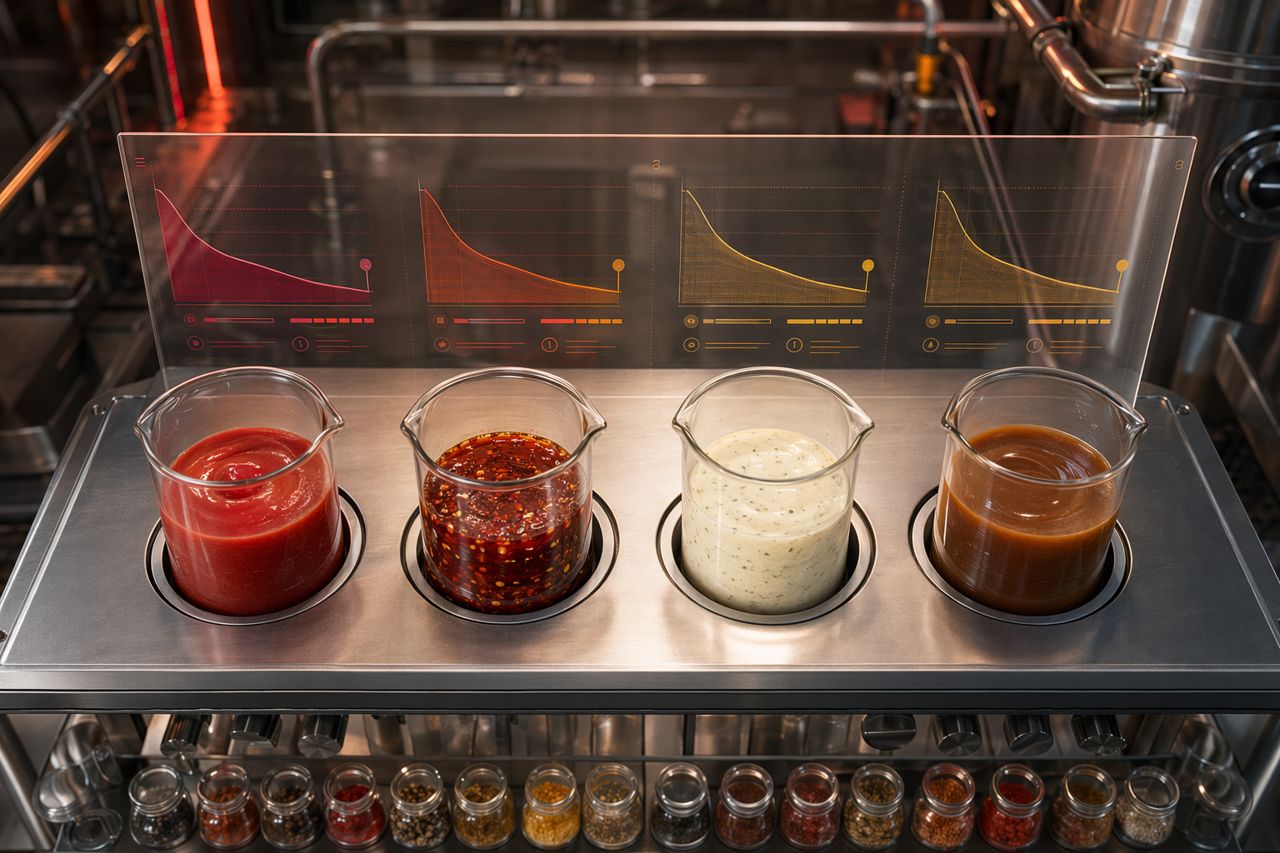
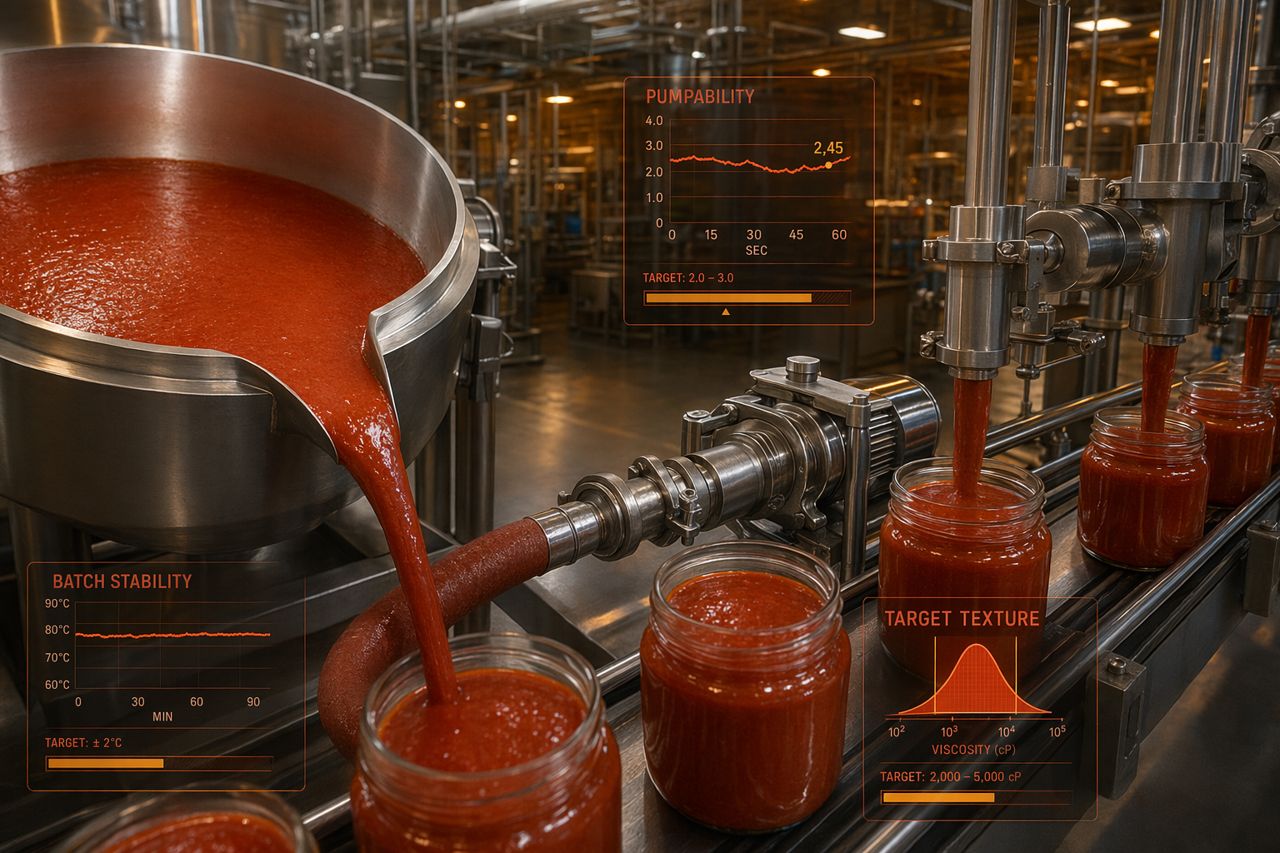
Cloud kitchen sauce production moves fast. A tomato base that pumps cleanly at 9 a.m. can tighten after holding. A chili glaze can lose pour control after cooling. A starch-thickened sauce can look correct in the kettle, then haze, clump, or drift in the filling line.
Enzymecloud supplies enzyme solutions for factories that need controlled viscosity, cleaner flow, and repeatable texture across high-throughput sauce manufacturing. If you are looking for a food enzyme supplier for sauce manufacturing, our work starts with your formulation target, not a generic ingredient list.
We help R&D, production, and procurement teams evaluate enzyme options against real factory constraints: cook profile, pH, salt, oil phase, solids load, holding time, filling temperature, and finished-pack stability.
Built for sauce problems that show up at scale
Enzyme treatment can support sauce viscosity control when mechanical adjustment, dilution, or starch reduction creates tradeoffs in flavor, yield, or mouthfeel.
Common production challenges include:
- Over-thick sauces that resist pumping or create line pressure variation
- Starch haze, pasty texture, or post-cook thickening
- Viscosity drift during hot hold, cooling, or chilled storage
- Vegetable fiber or pulp systems that feel coarse or inconsistent
- Glazes and marinades that need flow without tasting watered down
- Batch-to-batch variation after raw material seasonality changes
- Fill-weight instability caused by inconsistent sauce body
Our role is to help you test enzyme routes that improve process behavior while protecting the eating experience.
What Enzymecloud can support
Starch-managed sauces
For gravies, curry bases, chili sauces, tomato blends, cheese-style sauces, and starch-supported dressings, enzyme selection can help reduce excessive thickness, improve pumpability, and manage haze risk. The goal is not to make sauce thin. The goal is to hit a controlled viscosity window that your pumps, fillers, and customers can trust.
Vegetable and fruit-based sauces
Tomato, pepper, onion, garlic, mango, tamarind, and herb bases carry natural pectin, fiber, and insoluble solids. Targeted enzyme programs can help improve extractability, reduce coarse body, support smoother mouthfeel, and improve yield from puree or mash systems.
Protein-containing sauces and emulsified systems
Mayonnaise-style sauces, creamy dressings, cheese sauces, and meat-associated bases may require a careful review of protein, fat, stabilizer, and thermal conditions. Enzymecloud helps screen options without destabilizing emulsion texture, flavor release, or finished product appearance.
Glazes, marinades, and high-solids sauces
High-sugar, high-salt, or high-solids systems can behave unpredictably under heat and shear. We support trials focused on flow behavior, coating quality, and viscosity repeatability from kettle to depositor.
Why factories choose enzyme-led viscosity control
Enzymes are not a shortcut around formulation discipline. Used correctly, they are a precision tool for reducing process friction and tightening batch control.
Potential manufacturing benefits include:
- Improved pumpability without aggressive dilution
- More stable filling behavior and less line adjustment
- Better yield from vegetable or fruit solids
- Cleaner texture in cooked starch systems
- Reduced risk of thickening after holding
- More repeatable mouthfeel across batches
- Lower rework caused by out-of-window viscosity
- Faster pilot learning before commercial scale-up
Our R&D-led supply model
Enzymecloud works as a technical supply partner, not just a bulk ingredient vendor. We align enzyme selection with your process map and target sauce profile.
1. Define the viscosity target
We clarify the desired behavior: spoonable, pourable, pumpable, clingy, glossy, chunky, smooth, or filler-ready. We also review where the problem appears: kettle, hold tank, transfer line, filler, chilled storage, or reheating.
2. Screen the formulation environment
Sauce systems can be hostile to enzyme performance. We review pH, heat exposure, salt, sugar, oil, preservatives, stabilizers, starch type, fiber load, and solids content before recommending a trial path.
3. Build a pilot trial plan
We help your team compare enzyme routes against control batches using practical plant indicators: flow behavior, visual clarity or haze, mouthfeel, yield, thermal stability, line pressure, fill consistency, and finished-pack texture.
4. Prepare for bulk supply
Once your trial confirms fit, Enzymecloud supports bulk supply planning, documentation alignment, batch consistency expectations, and operational handoff for purchasing and production teams.
Applications
Enzymecloud supports enzyme programs for:
- Tomato sauces and pizza sauces
- Chili sauces, hot sauces, and pepper pastes
- Curry bases and cooking sauces
- Gravies and brown sauces
- Creamy sauces and dressings
- Mayonnaise-style and emulsion-based sauces
- Glazes, marinades, and dipping sauces
- Fruit-based chutneys and sweet-savory sauces
- Vegetable purees and concentrated sauce bases
- Cloud kitchen central production sauces
What we need from your team
To recommend the right bulk enzyme approach, we typically ask for:
- Sauce type and target texture
- Current process flow from prep to filling
- Ingredient list or key composition notes
- pH range and thermal treatment profile
- Thickening system and starch or fiber source
- Where viscosity drift occurs
- Batch size and scale-up expectation
- Packaging and storage conditions
- Any clean-label, allergen, or documentation requirements
You do not need a perfect technical brief to start. A short description of the problem is enough for our team to begin the conversation.
Designed for cloud kitchen sauce factories
Cloud kitchen sauce production often runs many SKUs through shared equipment. That creates pressure for fast changeovers, tight viscosity windows, and sauces that behave predictably after cooking, holding, pumping, filling, chilling, and reheating.
Enzymecloud helps central kitchens and sauce factories reduce uncertainty before scale-up. We focus on practical outcomes: fewer blocked transfers, fewer emergency dilutions, fewer texture complaints, and more confidence when moving from pilot batch to production batch.
Request a quote
Tell us what sauce is drifting, thickening, hazing, or resisting flow. Enzymecloud will review your application and recommend a bulk enzyme supply path for pilot testing or commercial procurement.
Request a quote through the on-site contact form and include the product or application, quantity, destination country, sauce type, target viscosity behavior, batch size, and current production challenge. Wholesale and bulk supply for manufacturers and resellers; pack sizes are quoted per order.